
THE LEGACY
Traditional Japanese Tattoo

The Art of Wabori: Far Beyond Ink
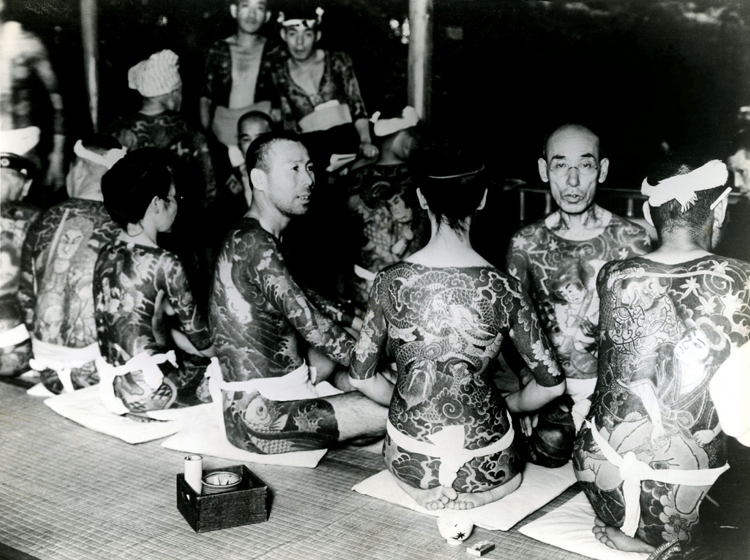
Entering the world of Wabori is not just about choosing a design; it is about accepting a commitment to history and to one’s own body. Unlike Western tattooing, which often focuses on isolated elements, true Irezumi treats the body as a single, continuous canvas.
The beauty of this art lies in the harmony between man and nature. In Wabori, every dragon that coils along an arm or every deity that protects the back is there for a reason. They are framed by Gakubori — the clouds, waves, and rocks — which do not serve merely as background, but as the element that gives life and movement to the piece. It is this structure that transforms the tattoo into a “suit of armor” of meaning.

The Journey of Perseverance
The process is a test of character. Whether in the precise lines of the machine or in the deep, organic filling of Tebori, each session is a step in a journey of patience. A full back piece or a complete bodysuit can take years, and it is precisely this time that gives value to the work. In Japan, Wabori has always been a symbol of resilience and inner strength (Gaman).

Respect for Tradition
For those who observe an authentic Wabori piece, what stands out is the technical rigor. The seasons must be respected: cherry blossoms (Sakura) belong to spring, while maple leaves (Momiji) evoke autumn. Mixing them incorrectly would break the narrative of the piece.
Tattooing in the traditional Japanese style is, above all, about keeping alive an ancient technique that survived centuries of prohibition and prejudice, evolving into one of the most sophisticated forms of body art on the planet. To have a Wabori is to carry not only an image, but a legacy of honor, protection, and mastery.